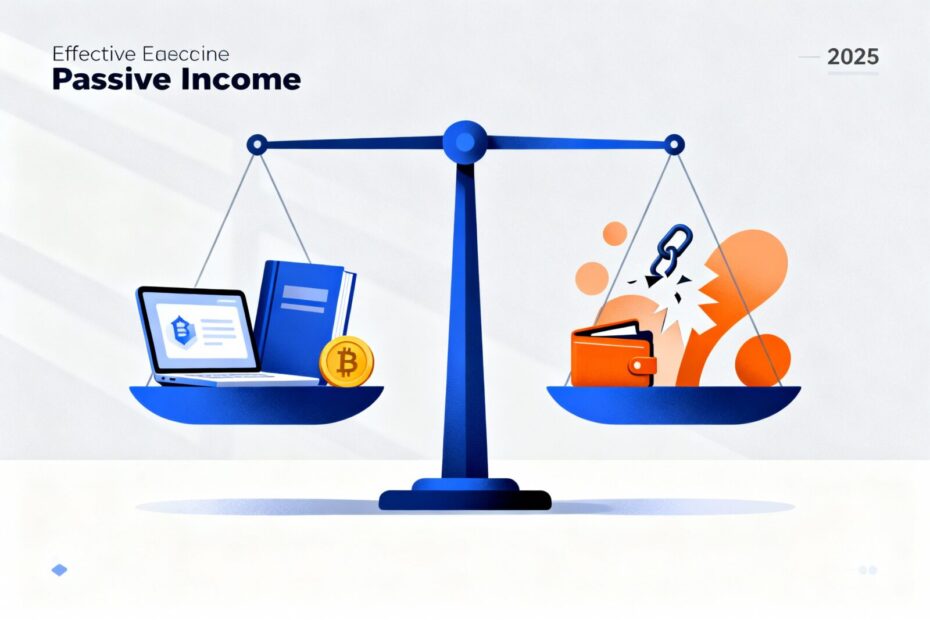
You want money that shows up while you sleep. Same. But let’s be real: most “passive income” either isn’t passive or isn’t income—at least not at first.
In 2025, the game changed again, and a lot of the old advice feels dusty. So here’s the straight talk: what still works, what flopped, and how to build streams that don’t swallow your entire life.
The Myth vs. The Math

We love the dream of “set it and forget it,” but the math says otherwise.
Every passive income play needs either money, time, or expertise—usually two out of three. If someone promises big cash with zero effort, it’s probably an ad, not a plan. So what counts as “passive” in 2025? Systems that keep earning after you do the heavy lift: you build once, then maintain. Think 10–20% ongoing effort, not 0%. Manage your expectations, and you’ll avoid the scammy stuff and build something that lasts.
What Actually Works Right Now
These aren’t hype.
They pay—if you execute.
1) Digital Products With Distribution
Courses, templates, niche ebooks, and toolkits still crush. The trick? Distribution beats genius. Use platforms with built-in traffic.
- Courses: Udemy, Skillshare (fast traffic, lower margins)
- Templates and assets: Gumroad, Etsy, Creative Market
- Newsletters + mini-courses: ConvertKit Commerce, Lemon Squeezy
You create once, then run light maintenance: updates, customer support, seasonal promos. Expect 80% of sales from 20% of your catalog.
Kill the rest or bundle them.
2) Affiliate Content With Topical Authority
Pure SEO blogs got beat up by search updates, AI overviews, and zero-click answers. But niche authority sites still work if you go deep and helpful.
- Create comparison content users actually search for: X vs Y for [use case]
- Build “problem → solution” tutorials with emails capturing leads
- Use affiliate networks: Impact, Partnerstack, CJ, Amazon (low commission but converts)
Focus on user intent, not keyword density. And diversify traffic: search, Pinterest, email.
IMO, email saves affiliate sites when Google sneezes.
3) SaaS Micro-Tools
You don’t need a venture-backed app. A tiny tool that solves one annoying problem can pay forever if you niche down.
- Examples: AI prompt libraries with API wrappers, invoice generators for creators, captioning tools
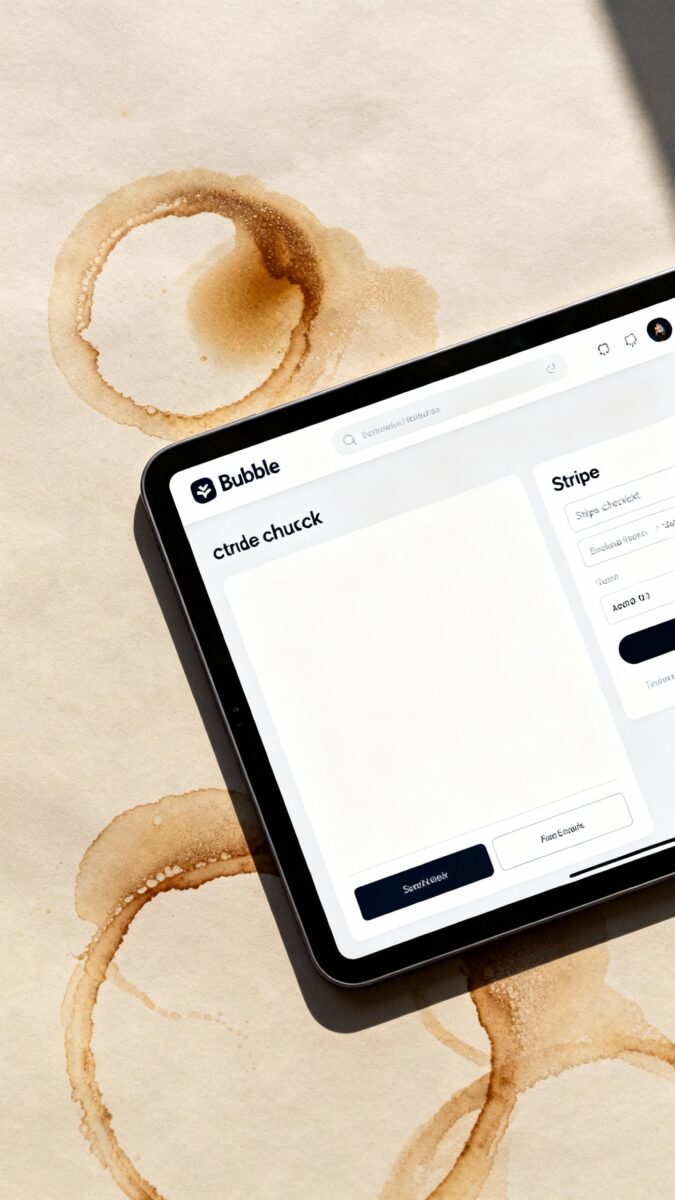
- Stack: No-code + lightweight backend (Bubble, Supabase, Stripe, Paddle)
- Pricing: $5–$15/month beats “lifetime deal” chaos
Support and uptime become your “not-so-passive” cost. Keep scope small and you’ll win.
4) Dividend Stocks and Broad Index Funds
Not exciting.
Very effective. You buy, you wait, you get paid.
- Simple play: DCA into a broad index (e.g., S&P 500 ETF) + a dividend ETF
- Reinvest until your snowball grows, then take cash flow
- Taxes matter—use tax-advantaged accounts if possible
FYI: chasing high yields usually means chasing risk. Steady beats spicy.
5) Real Estate Without Becoming a Landlord
You don’t need to unclog anyone’s sink.
- REITs: liquid, diversified, monthly or quarterly dividends
- Crowdfunded deals: higher risk, vet platforms and sponsors hard
- Short-term rentals: profitable with software + co-hosts, but regulation can nuke you
IMO, REITs give you the chill version of real estate.
Rentals pay more but require systems (and tolerance for broken dishwashers).
What Mostly Doesn’t Work (Anymore)
Some plays aged like milk.
1) Dropshipping as a “Set and Forget” Business
Saturated niches, rising ad costs, and long shipping times killed the easy wins. It can still work with brand building, unique products, and fast shipping. But that’s a real business, not passive.
2) Low-Effort Print-on-Demand
Slapping quotes on T-shirts and waiting for riches? Nah.
These platforms now favor creators with consistent releases and a real brand. If you build a niche audience, sure. Otherwise, your designs drown.
3) Crypto Staking for “Guaranteed Yield”
Staking still exists, but yields fluctuate, risks remain, and platforms implode sometimes.
If you don’t understand smart contract and custodial risk, don’t call it passive. Speculation ≠ income.
The Automation Layer: Make It Actually Feel Passive
You don’t need a huge team. You need a few smart systems.
- Email sequences that sell while you sleep (welcome series, pitch sequences, seasonal promos)
- Content batching + scheduling (Notion + Buffer, or Airtable + Hootsuite)
- Payment + access automation (Stripe + Lemon Squeezy + Zapier/Make)
- Customer support with guardrails (HelpScout + FAQ + snippets + AI draft replies)
Automation doesn’t replace value; it replaces repetition. Build the engine once, then tweak.
Choosing Your Lane (Based on Your Assets)
Pick the play that matches your strengths.
Don’t brute-force a bad fit.
- Have money, little time? Index funds, REITs, dividend ETFs
- Have skills, some time? Digital products, micro-SaaS
- Have an audience? Affiliate offers, premium content, community memberships
- Have energy for 90 days? Build a flagship product + email funnel
Starter Blueprint (90 Days)
- Weeks 1–2: Research a painful micro-niche with active buyers (Reddit, forums, reviews)
- Weeks 3–6: Build a tight product (template pack or mini-tool). Ship v1 fast
- Weeks 7–8: Create 3 flagship pieces of content and 1 lead magnet
- Weeks 9–10: Launch to small audience, gather testimonials, iterate
- Weeks 11–12: Automate email, add one affiliate partner, run a small promo
Goal: one product that sells weekly without manual push. Repeat with variations.
Red Flags and Reality Checks
Some nonsense you can dodge:
- High-ticket coaching to “unlock passive income”: You’ll learn… to sell coaching
- Guaranteed ROI platforms: If guarantees exist, risk hides elsewhere
- AI content mills: Flooding the web with bland posts won’t rank or convert
- Lifetime deals addiction: Buying tools doesn’t build assets
Reality: Profit follows proof.
Show that people want what you offer and distribution gets easier.
Scaling Without Burning Out
Once you’ve got something that works, don’t break it with chaos. Scale with intention.
- Double down on the top 10% of content and products
- Outsource the bottom 20% of tasks that drain you (support, formatting, edits)
- Bundle offers and raise prices instead of launching five new things
- Build recurring revenue (subscriptions, memberships, updates)
IMO, growth by subtraction beats growth by addition. Keep the machine simple.
FAQ
How much money do I need to start?
You can start with almost nothing if you build digital products or affiliate content, but you’ll pay with time and effort.
If you want actual passive yield quickly, you need capital—think a few thousand for index funds or REITs. High returns with low money and low effort don’t exist.
Can AI make passive income for me?
AI helps you research, outline, draft, and automate. It does not replace expertise, taste, or distribution.
Use AI to speed the grind, not to avoid it. The winners use AI like power tools, not like autopilot.
What’s the fastest passive income stream?
“Fastest” usually means “small.” Affiliate content and templates can earn within weeks if you have distribution already. Without an audience, expect 60–90 days to first dollars and 6–12 months to meaningful income.
Not fun to hear, but accurate.
Is real estate still worth it in 2025?
Yes, but the easy Airbnb days ended in many cities due to regulation and higher costs. REITs offer lower hassle and liquidity. If you love operations and numbers, rentals can pay big.
If not, stay liquid and keep your weekends.
Should I quit my job to build passive income?
No. Build at night and on weekends until your income stream covers a safe percentage of your expenses. Then consider reducing hours or switching to part-time.
Keep your runway fat and your stress low.
What if I’m not “creative”?
Creativity isn’t the gatekeeper. Use data: read reviews, log pain points, and solve one tiny problem better than anyone. You don’t need to invent a new category.
You need to be useful and consistent.
Conclusion
Passive income in 2025 looks less like magic and more like systems. You put in focused effort upfront, automate the repetitive stuff, and let time compound your wins. Start with one lane, ship something simple, and build distribution.
Do that, and your “sleep money” might actually show up—without the fairy dust. FYI: boring often beats brilliant here.
EXPLORE MORE ON VIBE FOR CREATORS
Learn how to build sustainable income streams and grow with intention inside DIGITAL BUSINESS & INCOME .
Discover tools, platforms, and workflows that support your creative journey in CREATOR TOOLS & RESOURCES .
Discover how artificial intelligence is transforming the creator economy inside AI FOR CREATORS .
Explore powerful tools that help digital creators write, design, and grow faster in AI TOOLS FOR CREATORS .
Learn how to create virtual influencers, digital avatars, and AI-powered creator brands in AI AVATARS & VIRTUAL CREATORS .
Master Pinterest strategy, content creation, and long-term visibility with insights from PINTEREST & CONTENT STRATEGY .
Learn authentic marketing, branding, and audience connection inside MARKETING & BRAND TRUTHS .
Strengthen your confidence, clarity, and inner alignment through PERSONAL GROWTH & MINDSET .
Explore mindset shifts, creator confidence, and intentional growth in CREATOR MINDSET .
Download helpful resources, guides, and tools designed to support your journey in FREEBIES & PRINTABLES .