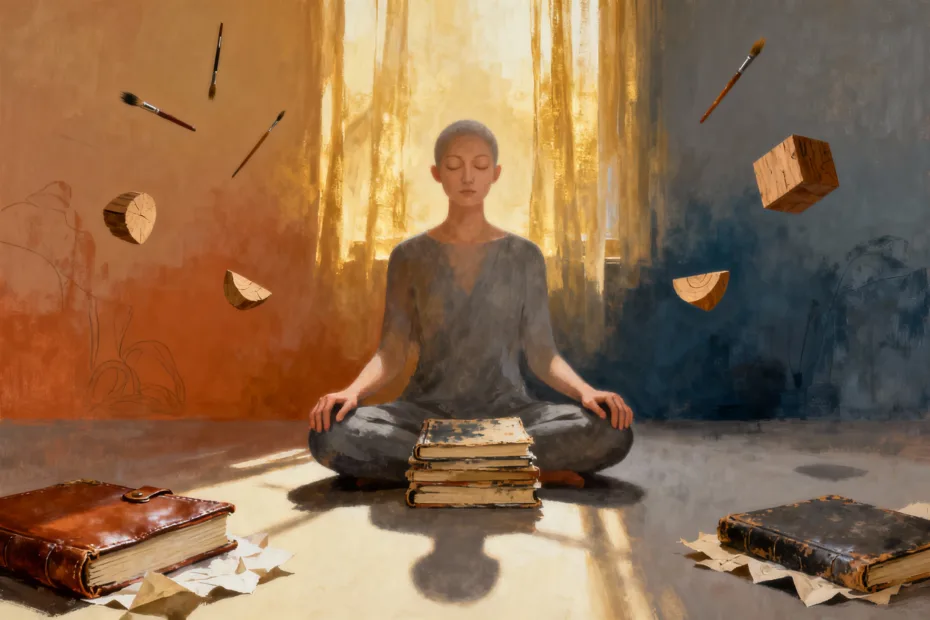
You can crank out a burst of brilliant work on adrenaline. But sustaining creativity for years? That takes different fuel. The secret lives under the hood—your energy, your attention, your emotions, your habits. If you want long-term creative stamina, you don’t just sharpen your skills—you tend the person who uses them.
Creativity as an Energy System, Not a Mood
Creativity doesn’t run on vibes alone. It runs on sleep, glucose, focus, and rituals. Yes, the muse shows up—but she prefers well-lit rooms and a rested brain.
When you treat creativity like an energy system, you stop blaming yourself for “not feeling it” and start checking inputs. Did you sleep? Hydrate? Move? Think of it like maintaining a studio: you keep it clean, stocked, and ready so ideas have space to land.
The Three Energy Buckets
- Biological energy: Sleep, nutrition, movement. Boring, crucial, non-negotiable.
- Emotional energy: Mood, relationships, stress. You can’t paint with a clenched jaw.
- Mental energy: Focus, clarity, novelty. Your brain needs both deep work and daydreaming.
Rituals That Prime the Creative Circuit

You don’t need a perfect routine. You need a reliable one. Rituals tell your brain, “We’re making things now,” and your brain gladly follows the script.
- Anchor tasks: Pick a consistent cue—same playlist, same tea, same chair. Pavlov would be proud.
- Time boxing: Create in short sprints (25–50 minutes). Set a timer, ignore perfection, ship ideas.
- Finish lines: Define “done” before you start. Boundaries protect your energy from endless tinkering.
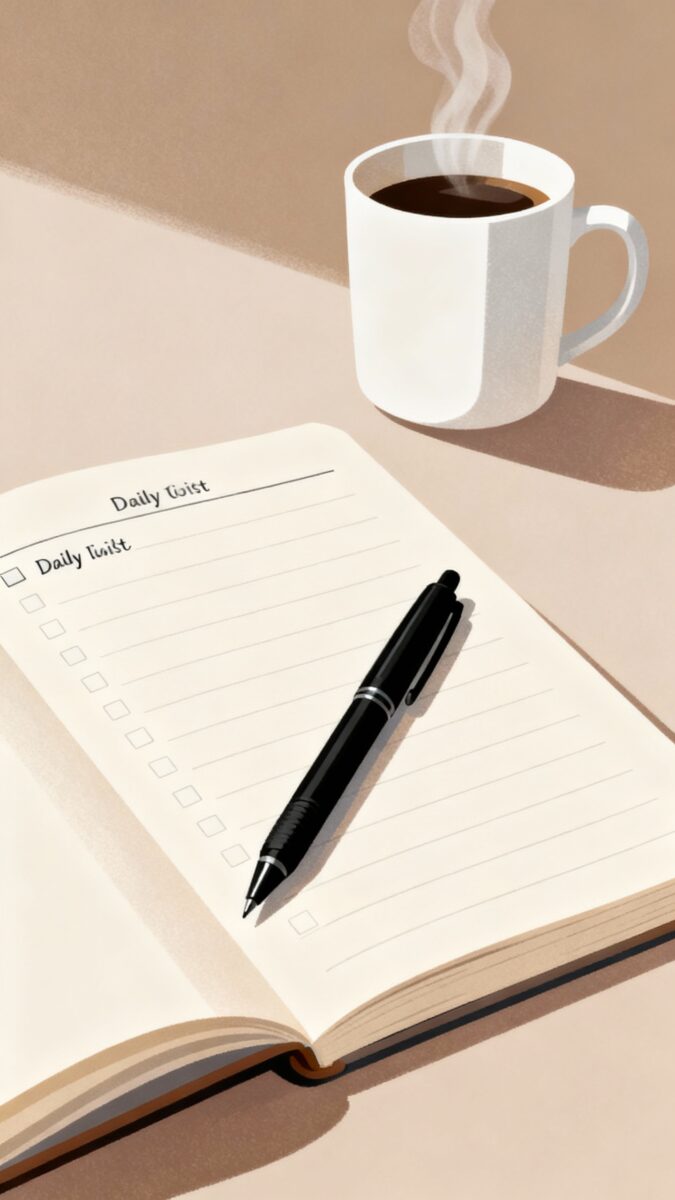
Build a Pre-Flight Checklist
Before you start, ask:
- What’s today’s micro-goal? (One page, one sketch, one scene.)
- What’s the constraint? (Two colors, 500 words, 30 minutes.)
- What gets me unstuck? (Walk, shower, scribble, music.)
Small, predictable steps create big, repeatable wins.
Managing the Inner Committee (aka Your Brain’s Drama Club)
Inside your head, a helpful cast speaks up: the Visionary, the Editor, the Critic, the Panicker. They all matter—just not at the same time.
Pro tip: Schedule them. Seriously. Let the Visionary lead during idea generation. Invite the Editor during revision. Ask the Critic for feedback after a break. The Panicker can… hold your coffee.
Turn Down the Inner Critic Without Muting It
- Name it: “Thanks, Karen the Critic, I’ll call you for proofreading.”
- Reframe it: Criticism shows you care. Cool. Let it serve the work, not stop it.
- Time-limit it: 10 minutes of “What could improve?” Then back to building.
Grief, Fear, and the Art of Staying

Creativity asks you to care deeply. That feels risky. You’ll face rejections, drafts that flop, and projects that die on your desk. Want durability? You need emotional tools.
- Normalize dips: Your best work often follows your worst weeks. Keep showing up. IMO, that’s the real flex.
- Use reflective journaling: Note one thing you learned from a “bad” session. Extract meaning, not shame.
- Practice exposure: Share small pieces early. Build tolerance for feedback while the stakes stay low.
Resilience Mini-Toolkit
- Write a “Why” statement you can read when you want to quit.
- Keep a “Nice Things People Said” folder for hard days.
- Celebrate inputs, not just outcomes. “I wrote for 30 minutes” counts.
Protecting Attention in a Swipe-Happy World
You can’t create deeply if you snack on dopamine all day. The internet will gladly hijack your attention and sell it back to you for $9.99/month. Decline the offer.
- Create before you consume: Morning is golden. Make something small before opening the attention casino.
- Design friction: Log out of social apps, bury them on page two, use website blockers. FYI, willpower is a terrible long-term plan.
- Single-task: Multitasking murders momentum. Pick one task and go all in.
Make Boredom Great Again
Your brain needs idle time to connect dots. Walk without headphones. Stare at a wall. Shower like it’s your job. Those “nothing moments” incubate ideas faster than another productivity hack.
Refilling the Well: Inputs That Nourish Output
If your work feels stale, your inputs probably do too. You can’t write fresh language if you only read tweets. Curate better fuel.
- Cross-pollinate: Musicians, read poetry. Writers, study architecture. Designers, visit gardens. Fresh lanes feed fresh ideas.
- Slow culture: Long essays, live performances, museums. Depth sharpens taste and technique.
- Field notes: Capture sparks immediately. Use a tiny notebook or voice memo. Future-you will thank you.
Build an “Inspiration Pantry”
Organize a digital folder with:
- Favorite lines, textures, melodies
- Reference images and color palettes
- Problem-solution examples for your craft
When you sit down to work, you won’t start empty. You’ll start stocked.
Cycle Your Seasons: Sprint, Recover, Evolve
Creativity thrives on cycles. You can’t sprint forever. You also can’t “recover” for months and call it strategy.
- Sprint: Focus tightly, ship quickly, collect feedback.
- Recover: Sleep more, move slowly, refill the well.
- Evolve: Review, learn, retool your system, and set the next arc.
Quarterly check-in: What energized you? What drained you? What will you stop, start, or keep next cycle?
Community, Mentors, and Honest Mirrors

Solo doesn’t mean alone. You need people who get the weirdness of making things. Choose them well.
- Peer circles: Small groups with regular shares. Keep it safe, direct, and kind.
- Mentors: Find someone two steps ahead. Ask clear questions. Implement advice quickly.
- Boundaries: Protect your early drafts. Not everyone deserves access to your half-baked ideas.
Feedback That Actually Helps
Ask for specifics:
- What’s one thing that works?
- What’s one thing to cut?
- Where did you get confused or bored?
Vague praise feels nice. Specific critique makes you better, faster.
FAQ
How do I stay creative when I feel burned out?
Step back and treat burnout as data. Strip your process to essentials: sleep more, shorten sessions, and lower the bar to “tiny wins.” Replace pressure with play—one sketch, one paragraph, one melody. When your energy returns, ramp up gradually. No heroics. Consistency beats drama, IMO.
What if I have zero time?
Use micro-sessions. Ten minutes daily outperforms a heroic Saturday you cancel anyway. Batch logistics (prep tools, set templates) so you can drop into flow faster. Also, cut one low-value habit and trade it for creation. Yes, even 15 minutes matters.
How do I handle fear of judgment?
Shrink the audience at first. Share with one trusted friend or a small group. Name the fear on paper, then make a plan anyway. Build exposure like strength training—light weights, more reps. Courage grows from action, not pep talks.
What’s the best routine for long-term creativity?
The best routine is the one you repeat. Anchor a time, place, and trigger; define micro-goals; protect attention; and cycle sprints with recovery. Adjust seasonally. Your life changes—your ritual should adapt without guilt.
How do I keep improving without hating my old work?
Treat old work like a mile marker, not a verdict. Archive it, note what you’d do differently, and move on. Improvement means outgrowing past versions of yourself. That’s the point. No need to roast your 2017 self (tempting though it is).
Can I stay creative without turning it into a grind?
Yes. Keep a playful project in parallel—something that doesn’t need to earn money or praise. Protect weekends or evenings for non-outcome creativity. When joy drives at least part of your work, the whole system runs smoother.
Conclusion
Sustainable creativity isn’t a lightning strike—it’s a campfire you tend. You feed it with sleep, focus, rituals, courage, and community. You protect it from storms and from your own perfectionism. Do the inner work, and the outer work compounds. Keep showing up, a little every day, and the muse learns your address.
EXPLORE MORE ON VIBE FOR CREATORS
Learn how to build sustainable income streams and grow with intention inside DIGITAL BUSINESS & INCOME .
Discover tools, platforms, and workflows that support your creative journey in CREATOR TOOLS & RESOURCES .
Discover how artificial intelligence is transforming the creator economy inside AI FOR CREATORS .
Explore powerful tools that help digital creators write, design, and grow faster in AI TOOLS FOR CREATORS .
Learn how to create virtual influencers, digital avatars, and AI-powered creator brands in AI AVATARS & VIRTUAL CREATORS .
Master Pinterest strategy, content creation, and long-term visibility with insights from PINTEREST & CONTENT STRATEGY .
Learn authentic marketing, branding, and audience connection inside MARKETING & BRAND TRUTHS .
Strengthen your confidence, clarity, and inner alignment through PERSONAL GROWTH & MINDSET .
Explore mindset shifts, creator confidence, and intentional growth in CREATOR MINDSET .
Download helpful resources, guides, and tools designed to support your journey in FREEBIES & PRINTABLES .