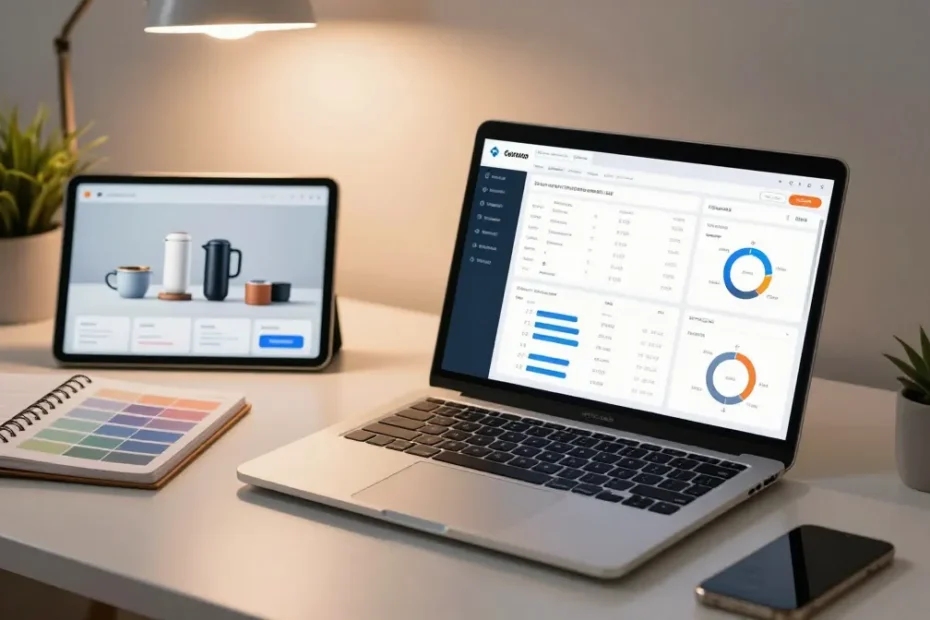
You don’t need a full IT team to run a smooth, competitive online shop anymore. AI tools are here to help small businesses level up fast, affordable, and with less brain-numbing guesswork. Think automation with personality, not sci-fi vibes. Let’s dive into what actually works for real-world shops.
Why AI is your new best employee (that you don’t have to train)
Imagine having a teammate who never sleeps, catches tiny trends, and handles repetitive tasks without sighing. That’s AI for you. It suggests product descriptions that actually sell, crunches numbers so your ads don’t waste money, and personalizes customer experiences at scale. FYI, you still call the shots, but you’re steering with better data.
Product pages that convert: writing, images, and SEO in one go

Good product pages feel like a salesperson who knows your audience and never forgets a feature. AI helps across three angles:
- Copy that sells: AI writing tools can draft compelling product descriptions in your brand voice. You tweak tone, add specifics, and you’re done in minutes.
- Visuals that pop: AI image tools can generate or optimize product photos, suggest background changes, and help with lifestyle shots even if you’re on a shoestring budget.
- SEO that’s not cringe: AI can craft keyword-friendly titles, meta descriptions, and alt text that actually improves search visibility without keyword stuffing.
Practical tips to pair AI with your product pages
– Start with a quick product page audit: which sections feel sleepy, which ones convert, and where you’re losing customers.
– Run a/b tests on two headline variants each week for top sellers.
– Use AI to generate five bullet points highlighting benefits, then trim to your brand voice.
Marketing that doesn’t feel like a gimmick
AI shines in audience insights and content that actually resonates. You don’t need a fancy agency to run lean campaigns.
- Smart ads: AI helps you optimize budgets, audiences, and creative—so you get more click-throughs without burning cash.
- Personalized emails: Triggered messages based on user behavior feel less spammy when AI scripts the copy and timing.
- Social content ideas: AI can brainstorm post ideas, generate captions, and suggest best posting times.
Subtle ways to keep it human
AI should augment, not replace personality. Always review generated content, inject your quirks, and add a human touch. If you wouldn’t say it in a coffee shop, don’t publish it in front of your audience.
Customer support that actually feels fast and helpful

Let’s be honest: customers hate waiting. AI chatbots and help desks can answer common questions instantly, free up your team, and still feel friendly.
- 24/7 basics: order status, returns policies, shipping times—covered in seconds.
- Escalation worked in: when it’s truly tricky, the bot hands off to a human with context, so there’s no “start over” pain.
- Self-service knowledge: AI-curated FAQs and help centers reduce repetitive questions.
Tips to keep support feeling warm
– Script your tone: keep it warm, a bit funny, and on-brand.
– Tell users what you can’t do: transparency wins trust.
– Track sentiment: if customers start frustrated, flag the conversation and bring in a human sooner rather than later.
Inventory and ops: run tighter with data, not drama
Inventory management isn’t glamorous, but AI can cut waste and save margins.
- Demand forecasting: AI looks at past sales, seasonality, and trends to predict what to stock.
- Reorder automation: set thresholds, and the system nudges or places orders automatically (with your okay, of course).
- Pricing nudges: smart pricing keeps you competitive without tanking margins.
When to push back on automation
If you’ve got sporadic demand or niche SKUs, human checks keep things sane. AI isn’t a crystal ball, it’s a really smart weather app.
Analytics that don’t require a data degree
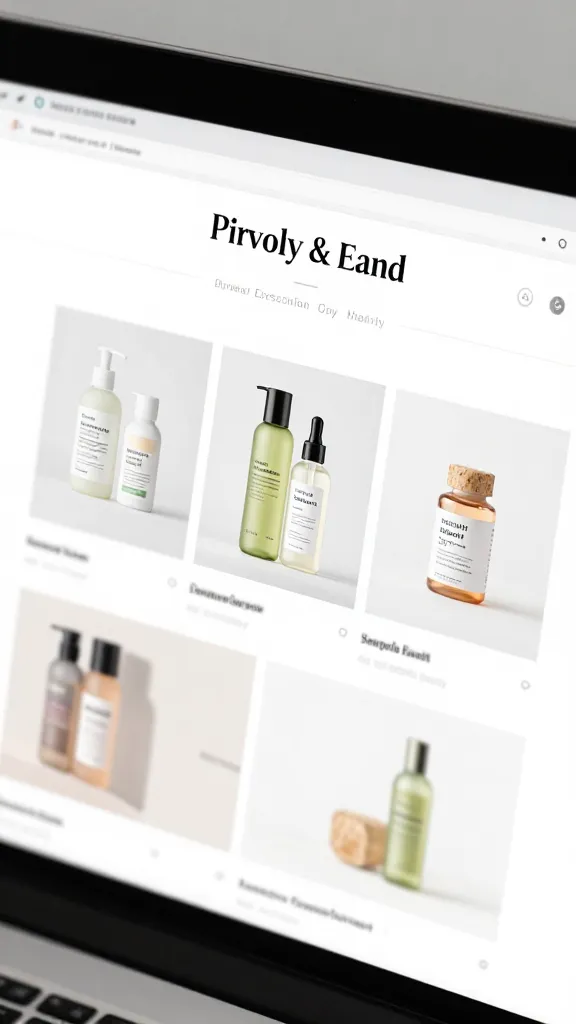
Numbers are less scary when AI translates them into actionable insights. You’ll spot what’s working, what’s flailing, and where to invest next.
- Performance dashboards: watch leading indicators like conversion rate, average order value, and customer lifetime value at a glance.
- Customer journey maps: AI analyzes touchpoints to show where you lose buyers and where you win them over.
- Experimentation on autopilot: run micro-experiments on landing pages or checkout to refine tactics.
A simple framework for quick decisions
– Define one goal (e.g., boost AOV).
– Run one AI-assisted change at a time.
– Measure impact for 1–2 weeks, then decide.
AI tools to consider for a small online business
Here’s a practical starter kit you can mix and match. No need to buy every shiny thing—start with what hits your current bottleneck.
- Copy and product pages: AI writing assistants for descriptions, meta tags, and promotional copy.
- Images: AI image editors or generators to optimize visuals and create alternative shots.
- Customer support: AI chatbots for common questions, plus sentiment-aware escalation to humans.
- Marketing automation: personalized email and social campaigns driven by customer behavior.
- Analytics: lightweight dashboards that highlight what actually moves the needle.
Choosing the right toolset
– Start with your biggest pain point. If your store has great products but poor conversions, focus on copy and UX.
– Check costs vs. impact: small monthly fees can pay off fast if you avoid waste.
– Look for easy integration: you don’t want a tech pile-up that requires a full-time admin.
Implementation sanity checks: start small, scale smart
Jumping into AI too quickly can backfire. Here’s a sane way to roll out tech without chaos.
- Pick one workflow to automate first. Your customer support bot or your product page optimization, maybe.
- Set clear success metrics: e.g., 10% lift in conversion, 15% faster response times.
- Run a pilot for a few weeks, then expand if it shines. If not, tweak or pivot.
FAQ
What AI tools are actually worth paying for as a small online shop?
AI tools that save time, cut waste, or increase conversions tend to be worth it. Look for automation with clear ROI, easy onboarding, and solid support. Start with one area you know drags your day down, like product descriptions or customer support, and measure impact before adding more.
Will AI replace human team members at my small business?
Nope. AI is a helper, not a replacement. It handles repetitive tasks and data-heavy work, freeing your humans for strategy, relationship-building, and creative thinking. IMO, the best setups blend AI efficiency with human charm.
Is AI compliant with privacy and data regulations for ecommerce?
Most reputable tools offer compliance features and data controls. You’re responsible for your policy disclosures and customer consent. Do a quick privacy impact check when you adopt a new tool and keep user data tight and transparent.
How quickly can I see results after implementing AI?
Depends on the area you automate. Expect faster response times in customer support within days, sharper product copy within a week, and measurable conversion lifts after a couple of weeks if you’ve got a good baseline to improve.
Do I need technical expertise to use AI tools?
Not necessarily. Many tools market themselves as plug-and-play with intuitive dashboards. Some basics help—like understanding your data and how to interpret results—but you don’t need a data science degree to start.
Conclusion
AI isn’t a mysterious oracle; it’s a toolbox for real-world small online businesses. Use it to speed up boring tasks, sharpen your marketing, and make smarter decisions without hiring a squad of interns. Start small, stay human, and let the data tell you where to grow. FYI, the best AI setup feels invisible—it just works so smoothly you forget it’s there. Ready to experiment? Your store, and your customers, will thank you.
EXPLORE MORE ON VIBE FOR CREATORS
Learn how to build sustainable income streams and grow with intention inside DIGITAL BUSINESS & INCOME .
Discover tools, platforms, and workflows that support your creative journey in CREATOR TOOLS & RESOURCES .
Discover how artificial intelligence is transforming the creator economy inside AI FOR CREATORS .
Explore powerful tools that help digital creators write, design, and grow faster in AI TOOLS FOR CREATORS .
Learn how to create virtual influencers, digital avatars, and AI-powered creator brands in AI AVATARS & VIRTUAL CREATORS .
Master Pinterest strategy, content creation, and long-term visibility with insights from PINTEREST & CONTENT STRATEGY .
Learn authentic marketing, branding, and audience connection inside MARKETING & BRAND TRUTHS .
Strengthen your confidence, clarity, and inner alignment through PERSONAL GROWTH & MINDSET .
Explore mindset shifts, creator confidence, and intentional growth in CREATOR MINDSET .
Download helpful resources, guides, and tools designed to support your journey in FREEBIES & PRINTABLES .