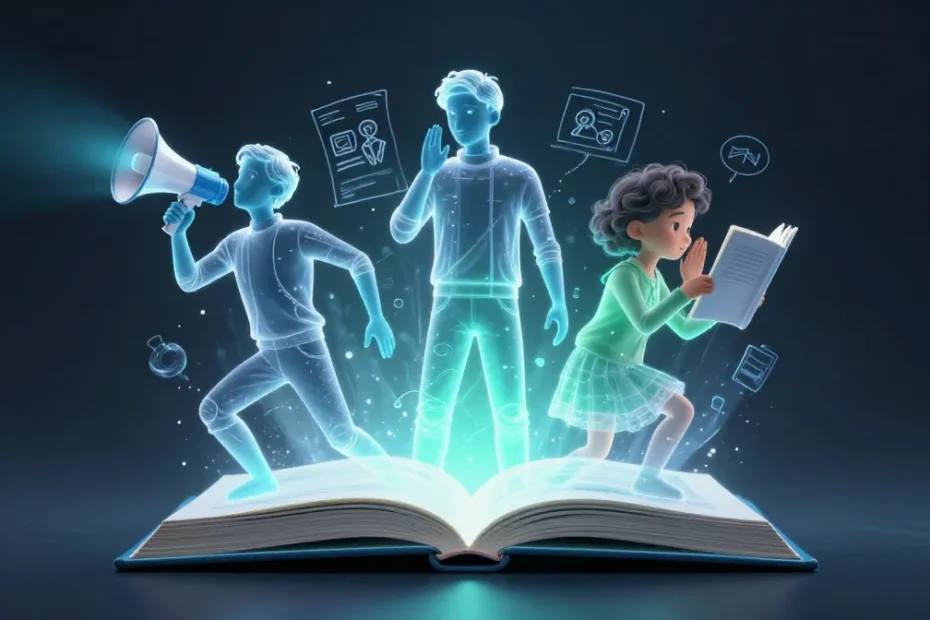
The idea of AI avatars telling a story feels like speeding through a cartoon of your own imagination—except the characters don’t blink, and they never ask for the snack bar. They simply show up, ready to narrate, argue, or sing along with your plot. AI avatars are changing how we create, share, and experience digital stories, one pixel at a time. And yes, it’s as cool as it sounds.
What exactly are AI avatars in storytelling?

Imagine a character you can customize, breathe life into, and send on any narrative mission you dream up. AI avatars are digital personas powered by artificial intelligence that can speak, react, and adapt to the story around them. They’re not just pretty faces on a screen—they’re interactive storytellers who can improvise, relate to readers, and keep pace with your plot twists.
– They can speak in voices you choose or generate new ones on the fly.
– They respond to user input and participate in branching narratives.
– They can embody different archetypes—from fearless heroes to quirky narrators.
– They integrate visuals, sound, and text to create a cohesive storytelling experience.
If you’ve ever wished you could hand over a chapter to a living, witty co-author, AI avatars are the next best thing. FYI, they don’t replace human creativity—they amplify it.
Where they shine in digital storytelling

AI avatars aren’t a gimmick; they’re a practical tool for shifting how audiences engage with stories. They excel in four main areas:
– Immersion: A talking character on screen makes scenes feel real in a way passive text can’t. The avatar can react to reader choices, changing mood and pacing in real time.
– Accessibility: For readers who struggle with long blocks of text, audio and visual storytelling provides a welcoming entry point.
– Personalization: Want a character that mirrors your preferences or cultural background? Avatars can adapt, offering unique experiences to different readers.
– Collaboration: Teams can prototype scenes quickly, test audience reactions, and iterate with a responsive co-creator.
That said, they’re not magic. You still need a solid story, clear character goals, and a plan for how the avatar will serve your narrative—not hijack it.
How to craft memorable AI avatars
Creating a character your readers care about requires a few practical moves. Here’s a practical starter kit:
– Define the role: Is the avatar a guide, a foil, or the comic relief? Knowing this shapes dialogue, pace, and tone.
– Build a voice profile: Select a speaking style, rhythm, and vocabulary. Give your avatar quirks—reliable, sarcastic, softly poetic—so they feel human.
– Design their constraints: What can they do within the story? What can’t they do? Clear boundaries keep the plot moving.
– Map reactions to plot beats: Plan how the avatar should respond to key events. If the protagonist makes a risky choice, what’s the avatar’s pushback?
– Establish consistency: Maintain a core set of world rules the avatar respects. Readers notice when a character suddenly behaves out of habit.
- Character role
- Voice and personality
- Capabilities and limits
- Story alignment
- Consistency cues
Story formats that pair well with AI avatars

Different storytelling formats benefit from different avatar setups. Here are some popular pairings:
– Interactive novels: Readers choose paths, while avatars narrate and react to decisions.
– Animated micro-series: Short episodes with recurring avatars in vivid visuals and sound design.
– Performance poetry with agents: Avatars deliver lines with rhythm, while the audience influences tempo and tone.
– Educational tales: Avatars explain concepts, quiz readers, and adapt explanations to knowledge level.
– Live, in-app storytelling: Real-time audience input shapes the next scene, like a crowd-driven improv show.
Tech bits: what actually powers these avatars?
If you’re curious how the magic happens, here’s the quick rundown without the geeky jargon crash course:
– Natural language processing: The brain that understands what readers say and what the story needs to hear back.
– Text-to-speech: Converts the avatar’s lines into spoken words with selectable voices.
– Voice cloning and synthesis: Create distinct voices or fine-tune tones to fit character personality.
– Visual rendering: The face, expressions, and gestures that convey emotion alongside dialogue.
– Behavior modeling: Rules and machine learning guides dictation, pacing, and reactions.
– Context tracking: The avatar remembers past interactions to maintain continuity over scenes.
If you’re building on a tight budget, you can start with pre-made voices and assets, then layer more bespoke customization as you grow. FYI, you don’t need to reinvent the wheel for every project.
Ethics, representation, and storytelling responsibility
This tech is exciting, but it comes with responsibilities. Here’s what to keep in mind:
– Consent and ownership: If you borrow celebrity voices or real people’s likenesses, secure rights. Avoid stepping on someone’s brand.
– Cultural sensitivity: Avatars reflect authors. Avoid stereotypes and listen to diverse perspectives to keep characters respectful and authentic.
– Transparency: Let readers know when they’re interacting with an AI avatar. It builds trust and prevents confusion.
– Accessibility: Offer options for different abilities—subtitles, alt text, and adjustable pacing help all readers enjoy the story.
– Data privacy: Be mindful of what you collect from readers and how you store it. Minimal data, maximum privacy.
https://yourstory.ai/ethics (Bonus read: a quick primer on responsible AI in storytelling)
H3: Designing conversations that feel natural
– Keep responses concise: Short, punchy lines land better in interactive moments.
– Use pacing here-and-now cues: “Listen to this” or “What do you think next?” keeps momentum.
– Layer dialog with nonverbal cues: Expressions, gestures, and tone add meaning beyond words.
– Allow disagreement: A little friction with the avatar can make scenes more engaging than polite monologues.
H3: Managing authorial control
– Set clear decision points: Decide where the author’s control ends and the avatar’s autonomy begins.
– Create fallback paths: If the reader asks for something off-script, have safe, satisfying alternatives ready.
– Version control your interactions: Track how the avatar responds across chapters to maintain a coherent personality.
FAQs about AI avatars in digital storytelling
Can AI avatars replace human authors?
Nope. They’re more like supercharged co-authors. They handle routine dialogue, improvise in real-time, and help you test ideas quickly. The human touch—story structure, emotional nuance, and final edits—still stays with you.
Do readers like interacting with AI avatars?
Many do, especially readers who crave a sense of agency in stories. The best experiences feel like a dialogue, not a lecture. If the avatar is relatable and well-timed, readers stay hooked. IMO, it’s a vibe you either love or you don’t.
What about cost and accessibility?
Costs vary. You can start with free or low-cost AI tools for text-to-speech and basic avatars, then scale up with premium features as needed. Accessibility is a big win here—avatars can offer multilingual narration, adjustable reading speeds, and audio descriptions.
How do you measure success with AI avatars?
Look at engagement metrics: completion rates, time spent on scenes, and reader feedback. If readers linger and discuss the avatar’s choices, you’re onto something. Don’t rely on a single metric—combine qualitative and quantitative signals.
What if the technology runs into a storytelling snag?
You’ve got two options: pivot the scene or fall back to a human narrator voice. Always have a manual override so the story doesn’t stall. FYI, most great stories survive a small hiccup and come out stronger.
Conclusion
AI avatars are like having a witty, adaptable co-pilot for your stories. They speed up drafts, experiment with tone, and open up new ways for readers to engage. They’re not a magic wand, but they’re a damn good sidekick when used with a clear plan and a confident author’s voice. So, are you ready to give your characters a voice that can improvise with the plot twists you haven’t even written yet? IMO, the answer is yes—boldly, playfully, and with a dash of curiosity.
EXPLORE MORE ON VIBE FOR CREATORS
Learn how to build sustainable income streams and grow with intention inside DIGITAL BUSINESS & INCOME .
Discover tools, platforms, and workflows that support your creative journey in CREATOR TOOLS & RESOURCES .
Discover how artificial intelligence is transforming the creator economy inside AI FOR CREATORS .
Explore powerful tools that help digital creators write, design, and grow faster in AI TOOLS FOR CREATORS .
Learn how to create virtual influencers, digital avatars, and AI-powered creator brands in AI AVATARS & VIRTUAL CREATORS .
Master Pinterest strategy, content creation, and long-term visibility with insights from PINTEREST & CONTENT STRATEGY .
Learn authentic marketing, branding, and audience connection inside MARKETING & BRAND TRUTHS .
Strengthen your confidence, clarity, and inner alignment through PERSONAL GROWTH & MINDSET .
Explore mindset shifts, creator confidence, and intentional growth in CREATOR MINDSET .
Download helpful resources, guides, and tools designed to support your journey in FREEBIES & PRINTABLES .