You want blog posts that actually rank, not just look pretty in your CMS? Cool. Let’s skip fluff and get straight into the stuff that moves the needle in 2025: intent-matching content, smart structure, and a sprinkle of personality.
You’ll learn how to pick battles you can win, write like a human (shocker), and format for both readers and robots. Ready to outrank that smug competitor? Let’s go.
Start With Intent, Not Keywords

You don’t write for generic keywords anymore.
You write for problems, goals, and moods. What does your reader want, and how fast can you give it to them? Match search intent before you write word one. If someone searches “best CRM for freelancers,” they want a comparison with pricing, use cases, and pros/cons.
Not your life story. Not your company pitch.
- Informational: Explain clearly and completely (guides, how-tos).
- Commercial: Help them decide (comparisons, reviews).
- Transactional: Make it easy to buy (features, pricing, CTAs).
- Navigational: Don’t bother unless you’re the brand.
How to validate intent fast
- Google the keyword. Study the top 5 results.
Note format, length, and angle.
- Scan People Also Ask and Related Searches for subtopics.
- Check SERP features: videos, FAQs, snippets. Build content to earn those.
Choose Topics You Can Actually Rank For
You don’t need 10,000 monthly searches. You need qualified intent and realistic competition.
I’d pick 400 monthly searches with weak pages over a 20k monolith any day.
Quick topic selection workflow
- List 10 core problems your audience has.
- Use a keyword tool to find long-tail variants (questions, “best for,” “vs,” “near me”).
- Check the top results’ Domain/Topical Authority. If they’re weak or off-topic, that’s your opening.
- Group related keywords into one post. Don’t cannibalize yourself.
FYI: In 2025, topical authority beats raw domain size more often than you think.
Publish clusters, not orphans.
Outline Like a Pro (Then Write Like a Human)
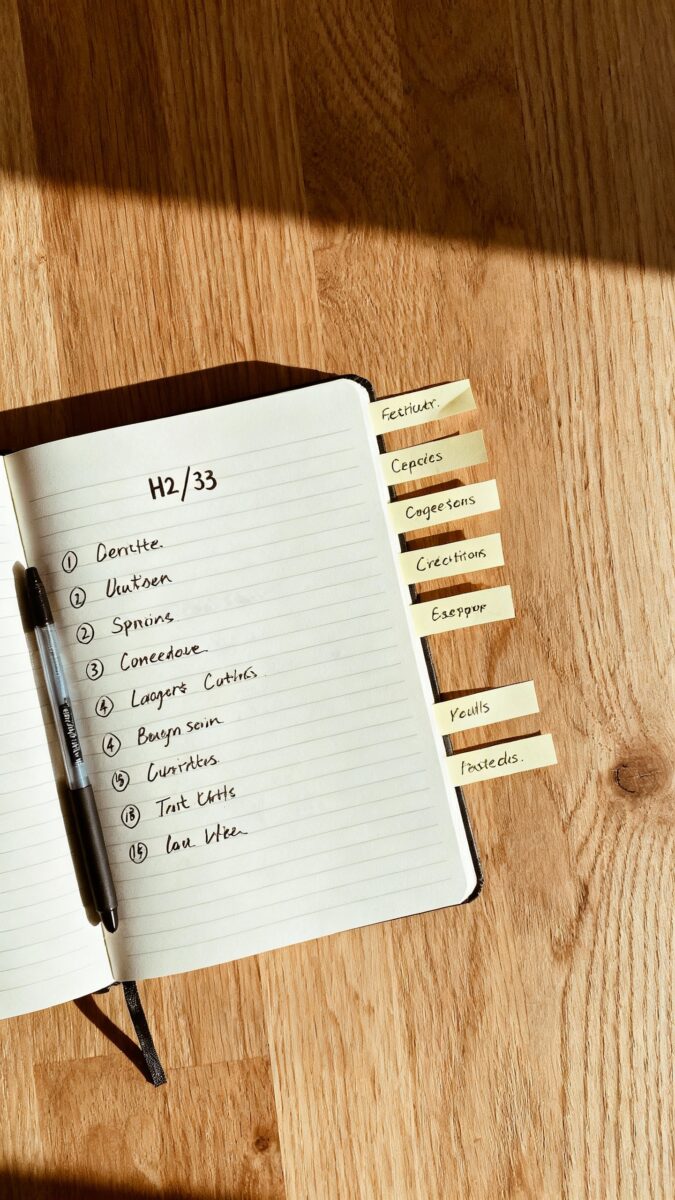
Outlines save you from rambling. You want scannable sections, logical flow, and enough depth to beat who’s ranking now.
Build a SERP-informed outline
- List 8–12 subtopics users need answered.
- Turn each into an H2 or H3. Use natural phrasing, not keyword spaghetti.
- Add a takeaway under each section.
Make skimmers happy.
Now write like someone who knows the topic. Use examples, numbers, and opinions. Don’t hedge. If something is outdated, say so.
If a tactic rocks, show results.
- Short paragraphs (2–4 lines).
- Simple sentences. Active voice only.
- Concrete verbs: show, prove, build, compare.
On-Page SEO That Actually Matters in 2025
You can ignore meta keyword tags, but you can’t ignore structure. Google still reads your signposts.
- Title tag: Promise the outcome.
Include the primary keyword naturally. Aim ~55–60 chars.
- H1: Similar to title, but more human. Only one.
- H2/H3: Map to subtopics and long-tail questions.
- Intro: Hook, authority, promise.
Keep it tight.
- URL: Short and descriptive: /seo-blog-posts-guide
- Images: Compress, descriptive file names, alt text that helps users.
- Internal links: Point to relevant pages and cornerstone content with descriptive anchor text.
- External links: Cite quality sources. It signals credibility.
Featured snippet playbook
- Answer specific questions in 40–60 words under an H2/H3.
- Use numbered lists for step-based queries.
- Define terms clearly: “X is…”
Optimize for Experience: E-E-A-T Without the Jargon
Yeah, E-E-A-T sounds like a committee, but it’s just trust and usefulness. Show you’ve been there, done that, and have receipts.
- Experience: Add real examples, screenshots, and original insights.
- Expertise: Explain the why, not just the what.
Reference credible data.
- Author: Include a bio with relevant credentials and a headshot.
- Freshness: Update stats and screenshots regularly. Add an “Updated” date.
Make it usable
- Readable font sizes, lots of white space.
- Jump links to sections (table of contents).
- Clear CTAs that match intent (download, compare, try).
IMO: A fast, clean page beats a bloated “pretty” page every day. Kill popups that block content.
Your bounce rate will thank you.
Content Depth: Go Wide, Then Go Deep
You need breadth to cover the topic and depth to prove value. Thin posts don’t rank. Bloated posts don’t convert.
Balance both.
Win with subtopic coverage
- Definitions, quick wins, pitfalls, tools, examples.
- Pricing and time estimates when relevant.
- Comparisons: when to use X vs Y.
- Templates or checklists to apply the advice.
Pro move: Include a short FAQ under the main content to catch long-tail queries and earn rich results.
Multimedia and Formats That Scale
Google and users love variety. Mix formats to boost dwell time and clarity.
- Visuals: Process diagrams, before/after screenshots, annotated examples.
- Short videos: 60–120 seconds summarizing the post.
- Data: Tables and charts for comparisons.
- Downloads: Templates or checklists for leads.
FYI: If you can’t make a video, at least include a skimmable summary box with the key steps or takeaways.
Smart AI Use Without Sounding Like a Robot
AI helps you research and draft, but you still need your brain. Blend speed with originality.
- Use AI for outlines, FAQs, and first-pass drafts.
- Add your voice, examples, and contrarian takes.
Strip filler.
- Run fact checks. Verify every stat and link to the source.
- Detect repetition and remove clichés. If it reads like oatmeal, rewrite.
IMO: Your edge is perspective.
Share what actually worked, even if it’s messy.
Measure, Iterate, Repeat
Set goals before you publish. Rankings are a means, not the end. Traffic that converts wins.
- Metrics: Click-through rate, dwell time, scroll depth, conversions, backlinks, featured snippets.
- Fixes: Improve titles, move key info higher, add missing sections, compress images, clarify CTAs.
- Update cadence: Refresh high-value posts quarterly or after major SERP shifts.
Content relaunch checklist
- Add new data or examples.
- Answer new People Also Ask questions.
- Improve internal linking and schema.
- Re-promote via email and social.
FAQ
How long should an SEO blog post be in 2025?
As long as it needs to solve the problem fully.
Many winning posts land between 1,000–2,200 words, but depth beats length. If you can resolve the intent crisply at 900 words, do it. If the topic needs 3,000 words and a table, bring snacks.
Do keywords still matter with AI-driven search?
Yes, but not like 2015.
Use keywords to align with how people phrase problems, then structure the content around intent. Include natural synonyms and related terms. Avoid stuffing.
Write for clarity, not density.
How often should I update old posts?
Quarterly for money pages, twice a year for evergreen content. Update when stats go stale, competitors outdo you, or the SERP adds new features. Small refreshes compound rankings over time.
What’s the fastest way to improve rankings on an existing post?
Fix the title/intro for clarity and promise, add a missing section that competitors cover, answer a key question in snippet-friendly format, and tighten internal links.
You’d be surprised how often that combo bumps you 2–4 spots.
Should I use schema markup?
Yes, when relevant. FAQ, HowTo, Article, Product, and Review schema can unlock rich results. Keep it accurate.
Don’t spam, or you’ll lose trust (and visibility).
Is building backlinks still worth it?
Absolutely, but earn them with standout content and smart outreach. Unique data, strong visuals, and actionable frameworks attract links. Partnerships and PR beat cold spam every time.
Conclusion
Ranking in 2025 means understanding intent, choosing winnable topics, structuring like a pro, and writing with actual personality.
Layer in smart on-page SEO, visuals, and regular updates, and you’ll outrun most of the internet. Keep it useful, keep it human, and keep iterating. The algorithm changes; helpful content that respects readers doesn’t.
EXPLORE MORE ON VIBE FOR CREATORS
Learn how to build sustainable income streams and grow with intention inside DIGITAL BUSINESS & INCOME .
Discover tools, platforms, and workflows that support your creative journey in CREATOR TOOLS & RESOURCES .
Discover how artificial intelligence is transforming the creator economy inside AI FOR CREATORS .
Explore powerful tools that help digital creators write, design, and grow faster in AI TOOLS FOR CREATORS .
Learn how to create virtual influencers, digital avatars, and AI-powered creator brands in AI AVATARS & VIRTUAL CREATORS .
Master Pinterest strategy, content creation, and long-term visibility with insights from PINTEREST & CONTENT STRATEGY .
Learn authentic marketing, branding, and audience connection inside MARKETING & BRAND TRUTHS .
Strengthen your confidence, clarity, and inner alignment through PERSONAL GROWTH & MINDSET .
Explore mindset shifts, creator confidence, and intentional growth in CREATOR MINDSET .
Download helpful resources, guides, and tools designed to support your journey in FREEBIES & PRINTABLES .