
You don’t need yet another “ultimate guide” that drones for 2,000 words before saying anything useful. You want the best AI tools for blogging and SEO in 2026, fast. The ones that actually help you write sharper, rank higher, and publish faster without turning your voice into corporate oatmeal.
Cool. Let’s dive right into the stack that serious content folks swear by (and the ones I’d recommend to my own team).
Strategy First: AI That Plans What To Write (And Why)

You can’t out-write a bad strategy. So start with tools that map topics, analyze intent, and prove demand before you ever open a blank doc.
The right stack here saves you hours and prevents “meh” posts.
- Ahrefs + Semrush (2026 editions): Still king/queen for keyword intelligence, competitor gaps, and SERP features. Use their AI clustering to group topics by intent and difficulty. Their “Content Gap 2.0” is scary good.
- AlsoAsked / AnswerThePublic (AI-boosted): Great for question mining and PAA (People Also Ask) angles.
Build your H2/H3s straight from user questions.
- MarketMuse / Clearscope: They analyze top-ranking content and suggest coverage, entities, and topical depth. You’ll stop guessing what to include.
Pro Workflow
- Use Semrush to find opportunity keywords and cluster them.
- Run target pages through MarketMuse to identify gaps.
- Feed those insights into your outline generator (we’ll get to that next).
Drafting: AI Writers That Don’t Sound Like Robots
Yes, generative AI can write solid drafts in 2026. No, you shouldn’t ship them untouched.
Think “AI co-writer,” not “AI replacement.” Your voice still matters (and Google can smell generic content like a bloodhound).
- ChatGPT with Custom GPTs: Create a brand-trained GPT with your style guide, tone, and examples. It’ll produce on-brand drafts, intros, and snappy CTAs. FYI, it’s fantastic for brainstorming analogies and hooks.
- Jasper: Strong templates, great for blog intros, product-led content, and campaign consistency.
The “Brand Voice Memory” keeps things aligned across authors.
- Claude: Amazing at long-form coherence and nuanced tone. If you hate editing clunky transitions, Claude’s your pal.
- Writer.com: Enterprise-grade governance. Lock in terminology, compliance, and style rules across teams.
Boring? Sure. Essential?
Also yes.
Outline-to-Draft Recipe
- Paste your topic cluster and competitive gaps.
- Ask for an outline with clear H2/H3s that match search intent.
- Generate section-by-section drafts to keep context tight.
- Insert your own examples, data, and product POV. Don’t skip this.
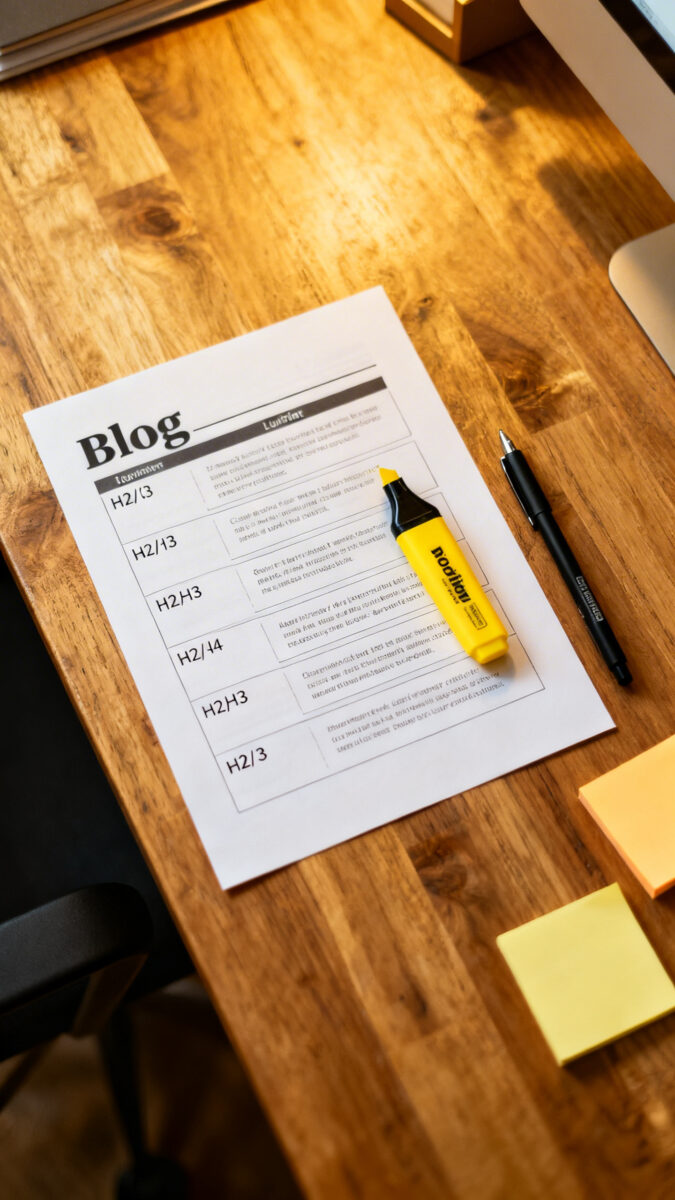
Optimization: On-Page SEO Without the Headache
This is where your AI editor becomes your secret weapon. You’ll cover the right entities, hit intent, and avoid keyword stuffing (because we left 2011 behind, right?).
- Surfer SEO: Still a beast for NLP-driven suggestions, internal link ideas, and content scoring.
The 2026 internal link graph is worth the subscription alone.
- Clearscope: Clean, simple, and accurate term coverage. If you want fewer knobs and more “just tell me what to add,” this is it.
- MarketMuse: Deep topical authority modeling. Great for site-wide planning and pillar/cluster mapping.
Entity-First Editing
- Review suggested entities (people, products, concepts) rather than fixating on raw keywords.
- Add a short “What is X?” explainer for complex terms.
Google loves clarity.
- Answer adjacent questions in H3s to win “People Also Ask” and long-tails.
Fact-Checking, Anti-Hallucination, and Citing Sources
AI can still make stuff up. Don’t let it trick you into quoting imaginary studies. Use citation-aware tools.
- Perplexity: Top-tier for research with live web citations.
Great for stat hunting and competitor snapshots.
- SciSpace / Elicit: When you need legit research papers and summaries that won’t embarrass you.
- Originality.ai: Detects AI-heavy text and checks for plagiarism. IMO, use it to catch over-automation and keep a healthy human fingerprint.
Reliable Research Loop
- Generate a claim list from your draft (stats, quotes, years, prices).
- Run each claim through Perplexity and add citations.
- Replace vague lines with precise, linked facts.

Images, Video, and Repurposing (Because Text Alone Won’t Cut It)
Readers scan. Add visuals, shorts, and carousels to keep them engaged and to snag extra traffic from YouTube and socials.
- Midjourney / Adobe Firefly: Create header images, diagrams, and custom illustrations.
Brand-styling is stellar in 2026.
- Canva with Magic Design: Turn a blog into social posts and infographics in minutes. Non-designers rejoice.
- Descript / CapCut AI: Convert scripts into snappy video explainers and audiograms. Auto-captions and B-roll?
One click.
- CastMagic / OpusClip: Repurpose long content into short clips and email snippets. Huge time-saver for content distribution.
Repurpose Like a Pro
- Turn your blog H2s into a 60-second video outline in Descript.
- Export reels for socials and embed the video back in the blog for better dwell time.
- Use Canva to spin out a carousel summarizing the post. Link back to your article.
Technical SEO and Publishing Automations
If Googlebot can’t crawl it, it won’t rank.
Use AI to ship clean pages and avoid silly technical fails.
- Frase: Solid for briefs, FAQs, and schema suggestions. It’ll auto-generate FAQ schema for quick wins.
- Schema Markup Generators (AI-based): Create Article, FAQ, HowTo, and Product schema from your copy. Validate with Rich Results Test.
- WordPress + Rank Math/Yoast (AI helpers): Automated meta descriptions, internal link suggestions, and readability checks right in the editor.
- Webflow AI / Ghost AI: For those not on WordPress, both now offer smart SEO fields and performance tips baked in.
Automation Ideas
- Auto-generate and review meta titles/descriptions after each edit.
- Use internal link suggestions to connect clusters immediately.
- Schedule content updates every 6 months using AI change detection.
Analytics, Testing, and Continuous Improvement
You wrote it.
Cool. Now prove it works. Let AI surface what to fix without drowning you in dashboards.
- Google Search Console + Looker Studio AI: Build dashboards that flag decaying pages and rising queries with minimal setup.
- GrowthBar / Surfer Audit: Track content scores vs. rankings over time and get refresh suggestions.
- A/B testing tools (VWO, Optimizely): Test headlines, intros, and CTAs.
Yes, for blogs too. Conversions matter.
Refresh Routine
- Monthly: Pull pages with dropping clicks/impressions.
- Run a Surfer or Clearscope refresh and add missing entities.
- Update stats and examples, swap the intro, and re-publish. Easy win.
FAQs
Will Google penalize AI-written content in 2026?
Google cares about usefulness and originality, not the tool you used.
If you use AI to accelerate expertise—not replace it—you’re fine. Add first-hand experience, cite sources, and answer the query completely.
What’s the best single tool if I’m on a budget?
Start with ChatGPT for drafting and Perplexity for research. Pair that with a free or cheap keyword tool (like Semrush’s limited plan) and you’ve got a lean, mean setup.
Upgrade to Surfer or Clearscope when you can.
How do I keep my brand voice consistent with AI?
Create a style guide and 3–5 on-brand sample posts. Train a custom GPT or Jasper brand voice with that material. Lock terminology and banned phrases in Writer.com if you have a team.
Do I still need a human editor?
Yes.
Always. Humans catch nuance, logic gaps, and tone issues AI misses. Also, your stories and opinions give your content soul.
IMO, the best combo is AI for speed, humans for judgment.
How often should I refresh content?
Every 6–9 months for evergreen pieces, sooner for fast-moving topics. Set alerts for ranking or traffic dips and refresh immediately. New stats, fresh examples, and better internal links usually do the trick.
What about AI detection and originality?
Use Originality.ai to keep an eye on over-automation.
More importantly, layer in your own insights, screenshots, and data. Unique perspective beats “AI undetectable” tricks every time.
Conclusion
AI won’t write great content for you; it’ll help you write great content faster. The 2026 stack looks like this: plan with Ahrefs/Semrush and MarketMuse, draft with ChatGPT or Claude, optimize with Surfer or Clearscope, fact-check with Perplexity, then repurpose with Canva and Descript.
Add human judgment and some personality, and you’ll outrank the bland AI sludge out there. Now go hit publish—and then repurpose that post into five more assets while your coffee’s still warm.
EXPLORE MORE ON VIBE FOR CREATORS
Learn how to build sustainable income streams and grow with intention inside DIGITAL BUSINESS & INCOME .
Discover tools, platforms, and workflows that support your creative journey in CREATOR TOOLS & RESOURCES .
Discover how artificial intelligence is transforming the creator economy inside AI FOR CREATORS .
Explore powerful tools that help digital creators write, design, and grow faster in AI TOOLS FOR CREATORS .
Learn how to create virtual influencers, digital avatars, and AI-powered creator brands in AI AVATARS & VIRTUAL CREATORS .
Master Pinterest strategy, content creation, and long-term visibility with insights from PINTEREST & CONTENT STRATEGY .
Learn authentic marketing, branding, and audience connection inside MARKETING & BRAND TRUTHS .
Strengthen your confidence, clarity, and inner alignment through PERSONAL GROWTH & MINDSET .
Explore mindset shifts, creator confidence, and intentional growth in CREATOR MINDSET .
Download helpful resources, guides, and tools designed to support your journey in FREEBIES & PRINTABLES .